Agencies and production studios
Agencies sell creativity but bill for deliverables. In between there is a gap: no one knows how many hours the job took, how many rounds of changes came in, or whether the agreed price still made sense at the end.
Illustrative figures, to explain the reasoning. The calculation is real: it comes from the hours logged per person and per stage. At most agencies, the line that kills the margin is out-of-scope changes — and it is never measured.
Your day
What eats away at the margin without showing up anywhere.
The third round wasn't in the quote, but it got done anyway.
Approvals, deadlines, adjustments — all scattered across individual chats.
You feel that client X loses you money, but you can't prove it.
Copying the Word file from the last job and changing the numbers by hand.
Each new client starts from a blank page, even when it's almost the same.
Where each piece fits
Each one solves one part. Together, they stop anyone from having to type the same thing twice. Below, what each one does in your case.
Each job is a project with tasks, a deadline and a timer. At the end, the cost comes from the hours actually logged — not from an estimate. The proposal is built from the price catalog, becomes a PDF, goes out on WhatsApp and comes back signed to the client's record.


The Image Creator builds artwork inside the system — text with outline and shadow, filters, gradients, QR codes, export to JPG or PDF. And the website builder turns a site you've already made into a template: import the zip, mark colors, text and images as variables, and each new client becomes just a form.
One agency number with queues by account or by agent, instead of chats on everyone's personal phone. Campaigns to your client base and to prospects, tracking who read them.
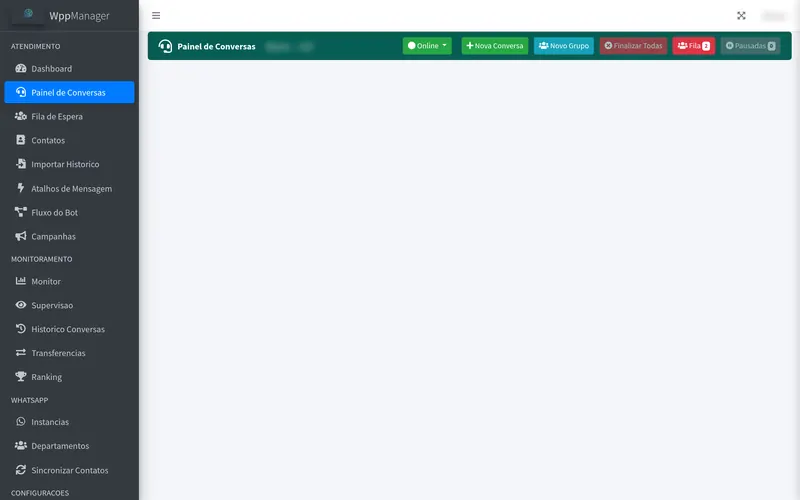
Where to start: With ScWork, using tasks and time tracking. The cost per job shows up in the first month — and it is usually the most revealing conversation the agency has ever had.
Where it fits
No one will ask you to drop what your team uses to create.
Stays with you
Photoshop, Illustrator, Figma, video editing, stock images. ScWork's Image Creator handles quick artwork and repetitive material — it doesn't replace your art director's professional tools.
Now lives in ScWork
How much the job cost, how many rounds of changes came in, which client is profitable, what was agreed in the meeting — and the proposal that goes out signed.
Before you ask
It's the most common objection and it deserves a straight answer: it depends on how you present it. If the number is used to push individual productivity, the team will resist — and rightly so. If it's used to prove to the client that the fourth round of changes costs money, the team is usually the first to defend it.
No, and it doesn't try to. The Image Creator is for campaign artwork, posts and repetitive material within the job workflow.
You import the zip of a site you've already built, mark colors, text and images as variables, and each new client becomes a form that generates a package ready to host. It's the piece that changes the business model of anyone who sells websites.
Yes, and it's often worth more — on a small team, a job that loses money weighs much more on the month.
No sales script. You tell us how things work today, we tell you honestly what we solve and what we don't — and where it would make sense to start.