Accounting firms
The fee is fixed and written in the contract. The hours your tax, payroll and accounting teams spend on that client change every month — and nobody measures them.
Illustrative figures, to explain the math. The method is real: it comes from hours actually tracked, allocated by each department's cost per hour. The numbers that matter are your firm's.
Your day
The part your accounting software can't see.
The same request to the same clients, over WhatsApp, one by one.
And the answer dies there — no record, nobody else knows.
You suspect which one it is, but you don't have the number to renegotiate the fee.
Procedures that live in people's heads are the industry standard.
And you find out when the invoice goes unpaid, not before.
Where each piece fits
Each one solves one part. Together, nobody has to type the same thing twice. Below is what each one does for you.
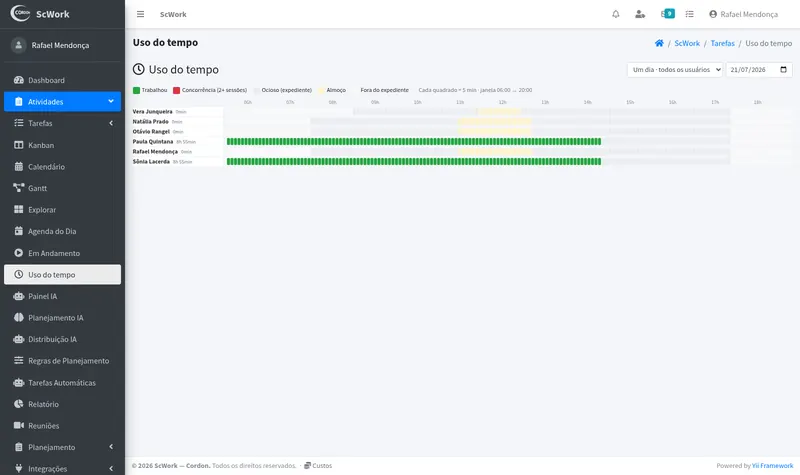
Every request becomes a task with a deadline and an owner. The timer shows how much time each client really takes — the basis for reviewing fees without guessing. The help desk logs what the client asked for, and "Daily Rescue" flags who has gone too long without contact.
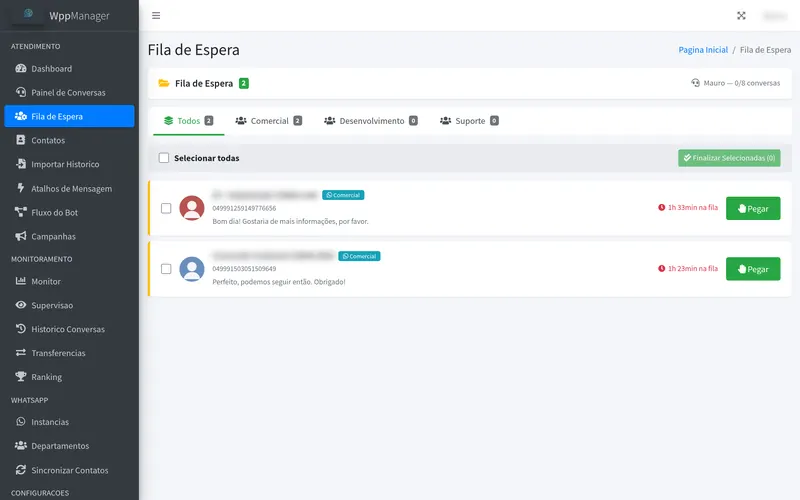
One number for the whole firm, with a queue per department — tax, payroll, accounting. Bulk campaigns for the monthly document request, tracking who read and who replied. And customer service no longer dies on the phone of whoever answered.
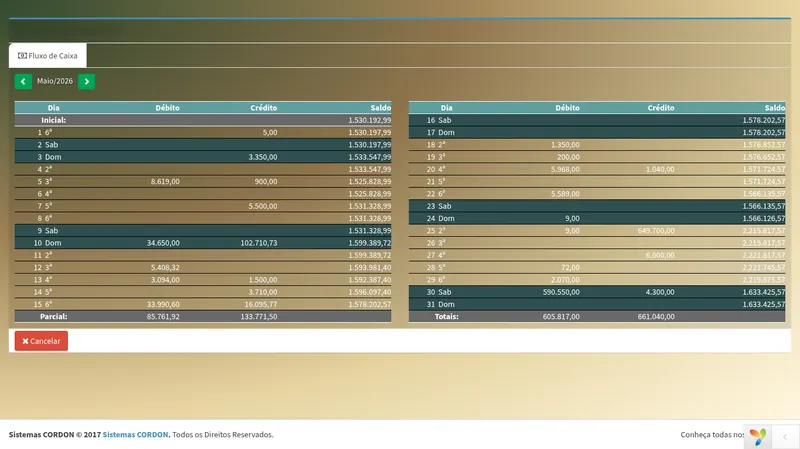
Fees receivable, accounts payable, cash flow and invoicing. If the firm bills by bank slip (boleto), collection runs from here — including over WhatsApp, with read receipts.
Where to start: With ScWork, Operations module. It answers the firm's most expensive question — how much time each client takes — and it's what Sistemas CORDON uses to run its own operation.
Where it fits
Worth saying right away, because it's every accountant's first question.
Stays in your accounting software
Bookkeeping, tax calculation, electronic filings (SPED), payroll, ancillary returns, balance sheets. Whatever you use to do the books stays exactly where it is. Nothing moves.
Now lives in ScWork
Who does it, when, how long it took, for which client, what it cost, what was agreed in the meeting, and who hasn't been served in three months.
Before you ask
It's a measurement system, and the difference lies in how you roll it out. It measures time per task and per client so you can price your services and balance workloads — not to punish anyone. We recommend the team knows from day one what is recorded, and the system is transparent with whoever is being timed. If the firm has an internal monitoring policy, we help fit it in; if not, it's a good moment to write one.
Tracking doesn't depend on people remembering to press a button: it follows real activity, with hourly prompts and checks outside business hours. In practice, buy-in comes when the team realizes the number is used to negotiate deadlines with clients — not to pressure them.
No. ScWork doesn't do bookkeeping, tax calculation or payroll, and it has no filing calendar. It works alongside what you already use.
Both. And worth knowing: meeting transcription runs on your server — no conversation about your clients' accounts goes to a third-party cloud.
One month of time tracking already shows which clients take too many hours for the fee they pay. That conversation usually pays for the system.
It depends on the modules and the size of your team. We don't publish a price list because that would have someone paying for screens they never open. No lock-in contract and no cancellation fee.
Thirty minutes, with the people who build the system. You describe how that client is served today and we build their numbers on screen. If it's clear we can't solve your case, we'll say so — it's cheaper for both sides.