Software and IT companies
IT companies live on recurring contracts, tickets and projects — three things that usually sit in three different tools, none of them talking to the others. At month-end, the invoice comes from an estimate.
Illustrative figures, to explain the reasoning. The calculation is real: it comes from hours actually tracked, per client and per activity type. Half the overage usually sits in work that never became a ticket.
Your day
If more than one of these happens to you, it's worth a conversation.
Deciding who does what, based on whoever shouted loudest yesterday.
Because nobody knows how many hours the contract really used.
It arrives on WhatsApp, someone copies it into the task tool, and the client asks again.
You find out at cancellation, not before.
The fix for the hard case was in their head.
Where each piece fits
Each one solves one part. Together, nobody has to type the same thing twice. Below is what each one does for you.
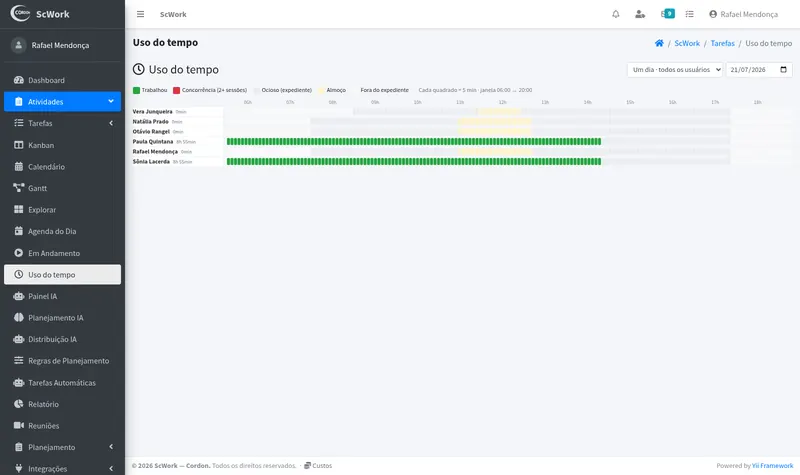
Tasks with a timer that follows real activity — not what people report. The daily schedule is built from rules you wrote, and every item comes with the reasoning behind it. Client tickets become tasks without retyping, and logged time becomes project cost and the basis for the invoice.
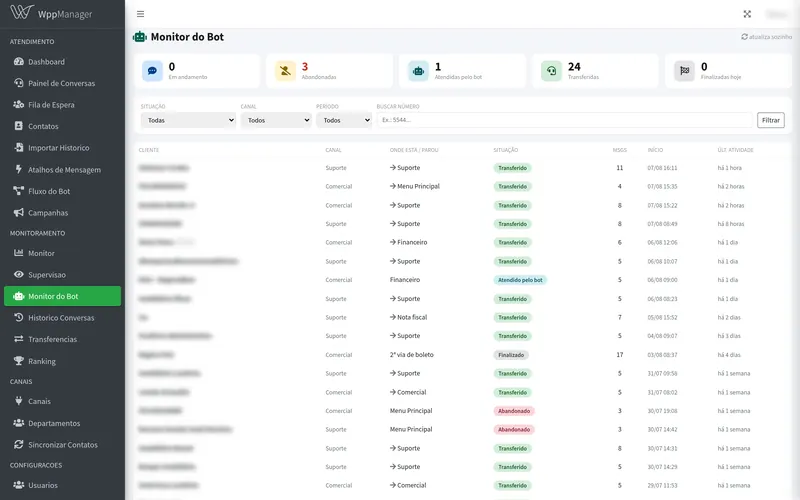
A queue per department, load-based assignment, and conversations that become tickets with an automatic summary. Service time feeds into hour tracking. And the bot handles repetitive requests on its own, from its own knowledge base.
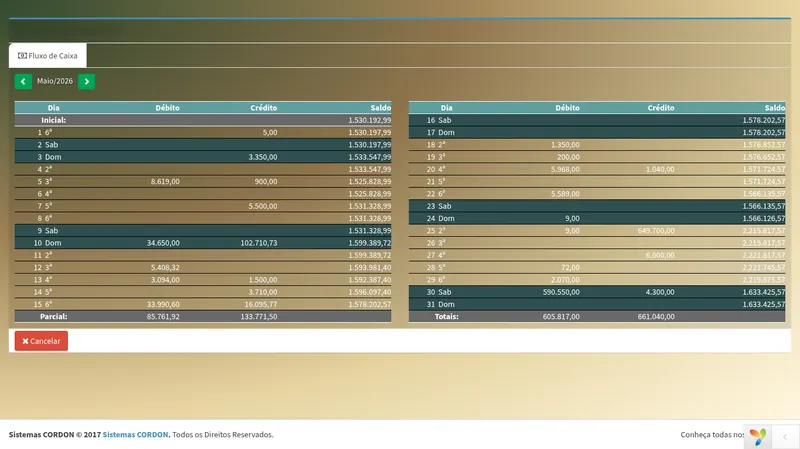
Subscription contracts with index-based adjustments, billing by bank slip (boleto) and PIX (Brazil's instant payment), accounts payable and cash flow. If you also resell products, Inventory and Invoicing come in.
Where to start: With ScWork, and usually with a single module: tasks and time. One month of time tracking already shows whether your invoices are right.
Where it fits
If you already use Git, CI and a sprint board, none of that changes.
Stays where it is
Repository, pull requests, pipeline, sprint board, monitoring. We don't ask you to replace the tools your dev team already knows.
Now lives in ScWork
Who handled it, for how long, for which client, under which contract — and how much of that contract was used before the month closes.
Before you ask
For the dev board, no. ScWork covers the layer those tools don't: hours measured per client, tickets, cost and billing. There's an integration with Redmine, and the public API makes others possible.
It's for measurement. The number exists so you can price contracts and negotiate deadlines, not to pressure the people doing the work. We recommend the team knows from day one what is recorded — the system is transparent with whoever is being timed.
It's designed for teams of 5 to 60 people, and the modules are separate. Many companies start with tasks and time only, which is where the numbers show up.
If you build custom software, no — we sell our own products. And if it makes sense, there's a sales representative path: you resell ours and earn recurring revenue. See Partners.
No sales script. You tell us how things work today, and we tell you honestly what we solve and what we don't — and where it would make sense to start.