Shopping malls, galleries and retail centers
Each store pays a percentage of its sales, with a guaranteed minimum, plus common charges and a marketing fund. And each one signed a different rule. Almost every rental system was built for fixed rent — and the rest ends up in a side spreadsheet.
Built for Brazilian law and banking. To operate in another country, ask us about localization.
Illustrative figures to show the reasoning — not customer data. The rule is whatever each lease says: percentage, minimum, threshold, due date. If the store doesn't sell above the minimum, the second slip simply doesn't exist.
Your day
It's not a feature list — it's what really happens, every month, in the management office.
Minimum rent, common charges and marketing fund on the same slip, itemized — so it never turns into an argument at the counter.
And someone has to chase whoever didn't report, check it and enter it.
Only for stores that sold above the threshold, under the rule each one signed. In a spreadsheet, this is where the mistakes show up.
Every investor wants their own statement, with the fee and withholding tax deducted.
IGP-M or IGP-DI (Brazilian indexes), minimum and fixed amounts adjusted on each one's date.
Suppliers, taxes, court deposits and partner draws, which have to match what came in.
Where each piece fits
Each one solves one part. Together, nobody has to type the same thing twice. Below, what each one does in your case.
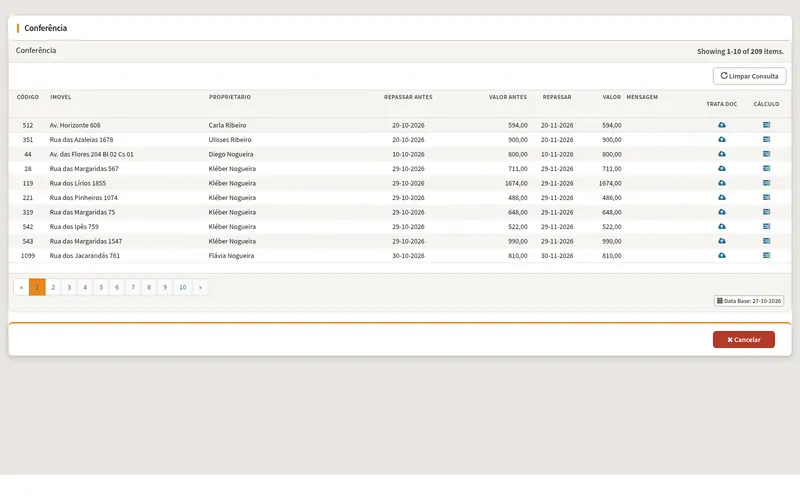
Percentage rent with a guaranteed minimum, common charges and marketing fund on the slip, and the supplementary installment: when sales pass the lease threshold, the excess automatically becomes a second slip with its own due date. Payouts per store owner, index-based adjustments and the mall's finances in one place.
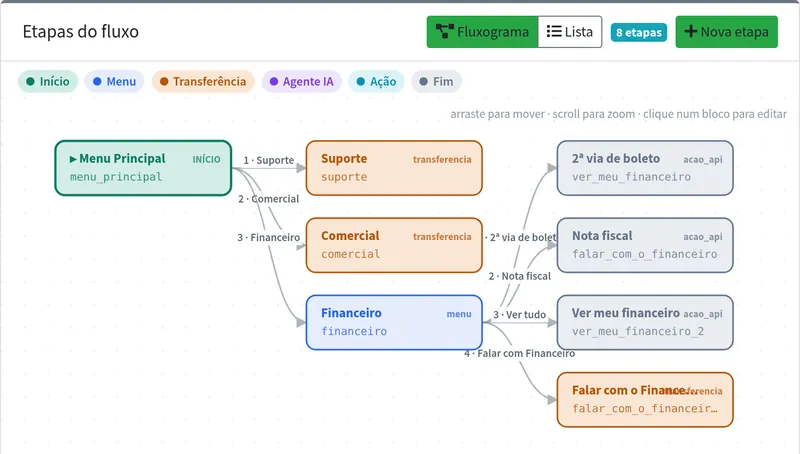
Several numbers in one panel, queues by department and a bot that sends a copy of the bank slip — and hands off to a person when it comes to negotiating.
Tickets with deadlines and owners, team tasks, a daily agenda and a funnel for vacant units: who visited, who asked for a proposal, who signed.
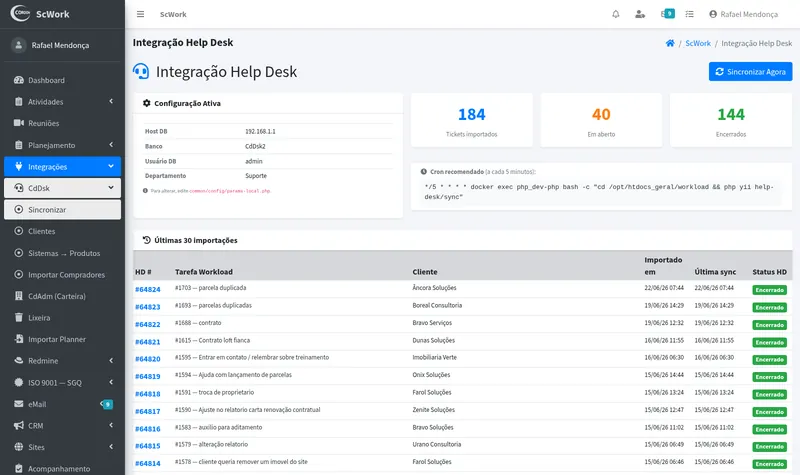
Where to start: With CdAdm, because that is where each lease rule and each store's money live. WppManager and ScWork come later, when service and ticket volume call for them.
Before you ask
Yes, because the rule lives in the lease type, not in a loose formula. One model with minimum rent and a percentage, another with common charges and a marketing fund, another with only a percentage — each store points to its own, and the math comes out the same every month.
The minimum doesn't wait: it's due on the agreed day. The supplementary installment is only created once sales are reported, and its due date respects a minimum period after the report — a store never gets a slip due the next day.
Until the supplementary installment is paid or sent to the bank, correcting the sales recalculates it. After that it locks, so what was already billed can't change underneath.
Each unit has its owner, or several, with each one's share. The payout goes out per owner, with the management fee and withholding tax deducted, plus their statement. If you prefer, the supplementary installment can stay with the management company instead of being paid out.
They come in with their history. A lease signed a year ago is entered with installments from its start date, and the system carries on from there.
No sales script. You tell us how things work today, and we tell you honestly what we solve and what we don't — and where it would make sense to start.